ROOTT P
Pterygoid Solution
Are you struggling in the "Atrophy Trap"? When residual bone height is <5 mm, traditional sinus lifts become a liability. Why risk a 15% membrane perforation rate or a 12-month healing delay? In Type D3-D4 bone, conventional grafting often stalls your workflow and compromises predictability.
Is your All-on-4 facing a "Cantilever Crisis"? Relying on distal cantilevers is a biomechanical gamble. Shifting 70% of the load anteriorly often leads to screw loosening, crestal bone loss, and survival rates as low as 72%.
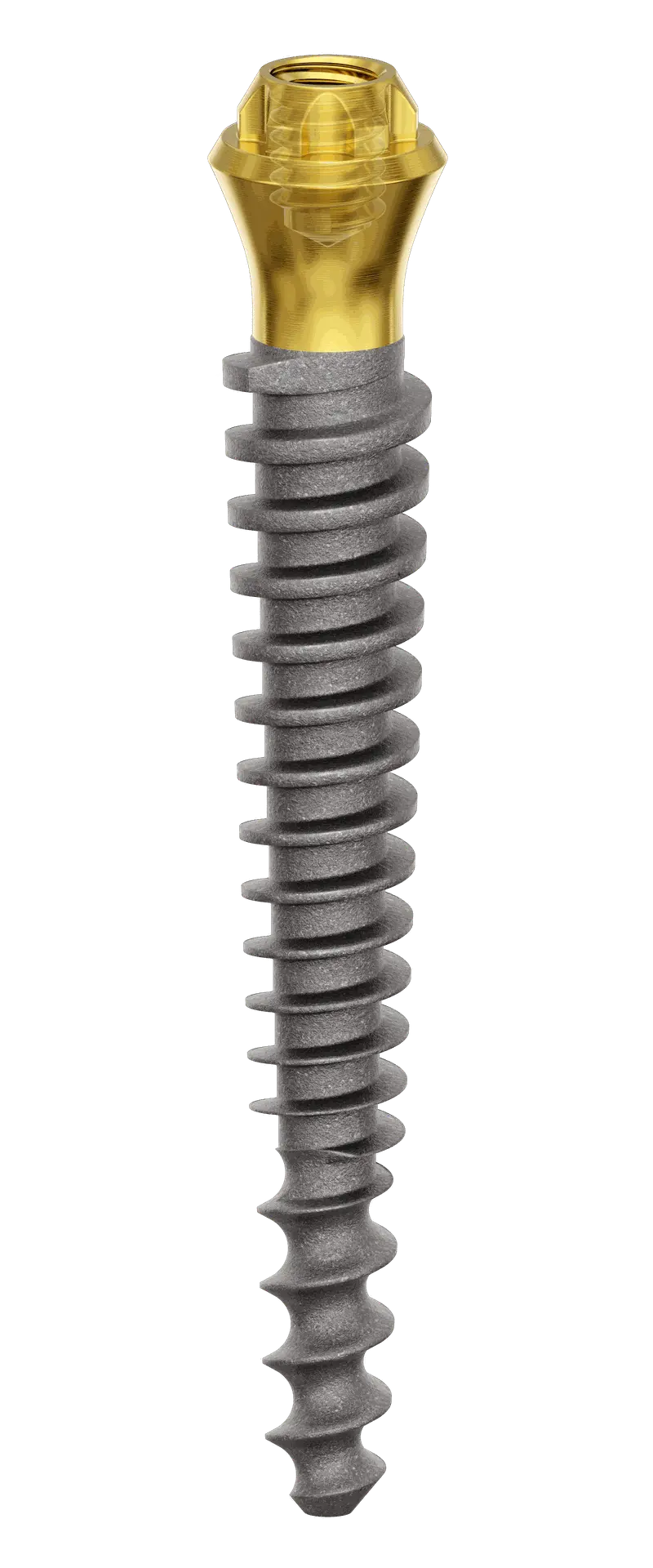
The ROOTT P
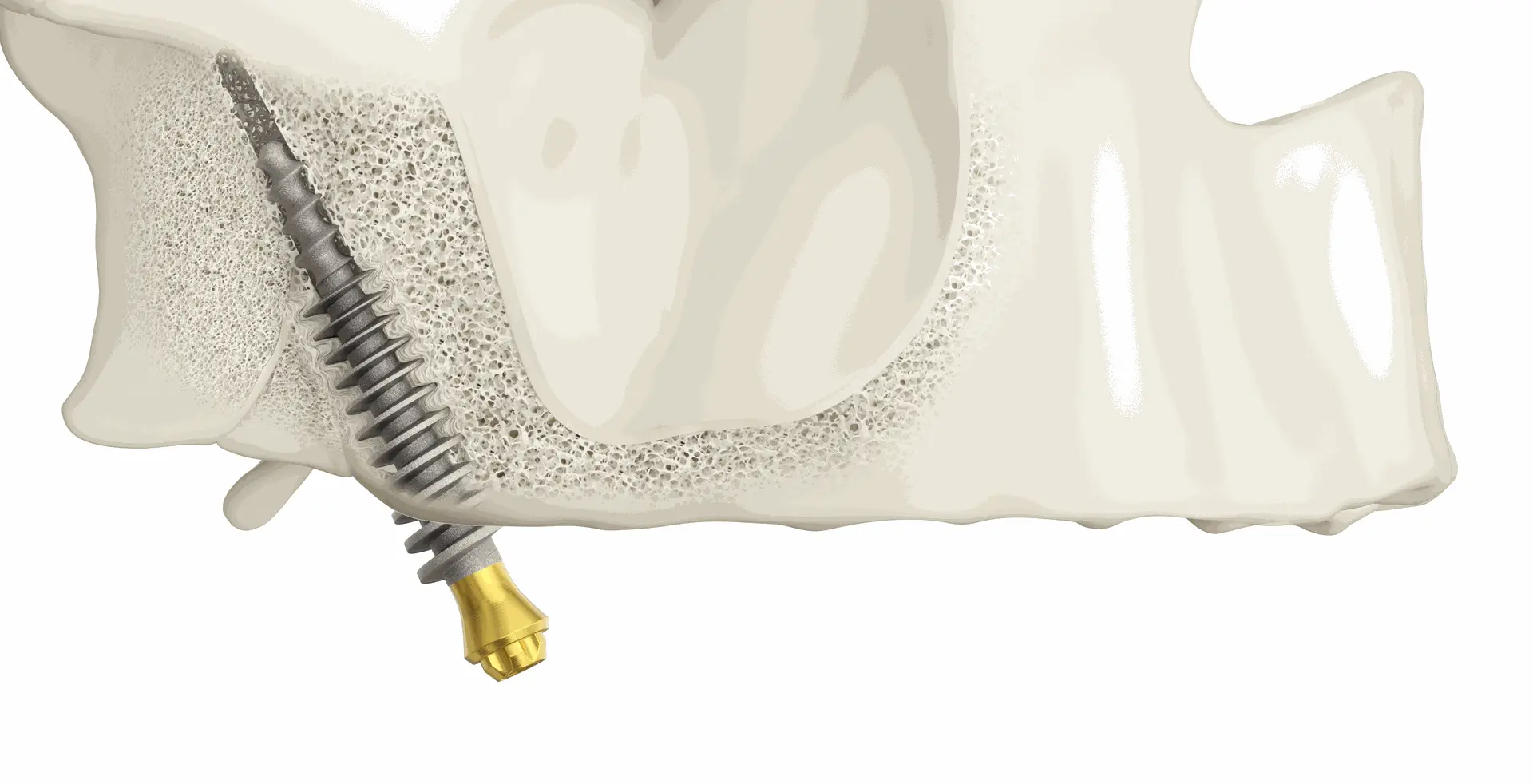
The ROOTT Pterygoid Implant System eliminates these compromises by anchoring into the reliable D1-D2 dense cortical bone of the pterygoid plate — a zone inherently unaffected by severe sinus pneumatization — to provide a predictable graftless solution that restores balance and ensures long-term survival (97% ) and superior biomechanics.
ZBL-Concept
Préservation de l’os crestal et harmonie des tissus mous. Le système est optimisé pour respecter la largeur biologique en utilisant une conception de tête multi-unités intégrée avec un brassard de 3 mm.
Connexion conique
La conception intégrée de la tête multi-unités crée l’interface du pilier. Il est doté d'une vis prothétique MU renforcée de Ø 1,8 mm pour une résistance supérieure à la fatigue et une gestion intégrée de l'angulation.
Conception hybride
Stabilité exceptionnelle dans les os compromis. La conception est optimisée pour l'engagement cortical dans l'os cortical dense D2-D3, offrant un ancrage sûr même dans l'os atrophique.
Surface biocompatible
L'implant présente une surface traitée hydrophile et permet une ostéointégration prévisible via un engagement cortical, ce qui contribue à un taux de réussite élevé (survie de 97 %).
ZBL-Concept
Préservation de l’os crestal et harmonie des tissus mous. Le système est optimisé pour respecter la largeur biologique en utilisant une conception de tête multi-unités intégrée avec un brassard de 3 mm.
Connexion conique
La conception intégrée de la tête multi-unités crée l’interface du pilier. Il est doté d'une vis prothétique MU renforcée de Ø 1,8 mm pour une résistance supérieure à la fatigue et une gestion intégrée de l'angulation.
Conception hybride
Stabilité exceptionnelle dans les os compromis. La conception est optimisée pour l'engagement cortical dans l'os cortical dense D2-D3, offrant un ancrage sûr même dans l'os atrophique.
Surface biocompatible
L'implant présente une surface traitée hydrophile et permet une ostéointégration prévisible via un engagement cortical, ce qui contribue à un taux de réussite élevé (survie de 97 %).
Concept de perte osseuse zéro
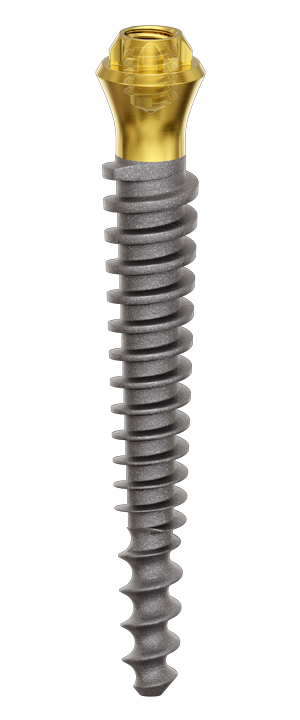
Crestal bone preservation and soft tissue harmony. The system is optimized to respect the biological width by utilizing an Integrated Multi-Unit Head Design with a 3 mm cuff , which helps maintain the hard and soft tissue stability crucial for lasting aesthetics.
Connexion conique
The Integrated Multi Unit Head Design creates the abutment interface. It features a reinforced Ø 1.8 mm prosthetic screw for superior fatigue resistance and built-in angulation management (30° slope per side, total 60° divergence tolerance), enabling secure, screw-retained prostheses without additional angulated components.
Conception hybride
Exceptional Stability in Compromised Bone. The design is optimized for cortical engagement in D2-D3 dense cortical bone, providing secure anchorage even in atrophic bone. Features include aggressive thread geometry for cortical anchorage, apical cutting flutes for insertion efficiency, and condensing/compressive V-shaped threads to maximize bone compaction in low-density Tuberosity area.
Surface biocompatible
The implant features a hydrophilic treated surface and achieves predictable osseointegration via cortical engagement, which contributes to a high success rate (97% survival).
Excellence sans greffe et supériorité biomécanique
Élimine le greffage
No grafting needed. This graftless approach eliminates the 6–9 month surgical delays, additional surgical site morbidity, and provides faster functional loading.
Biomécanique supérieure
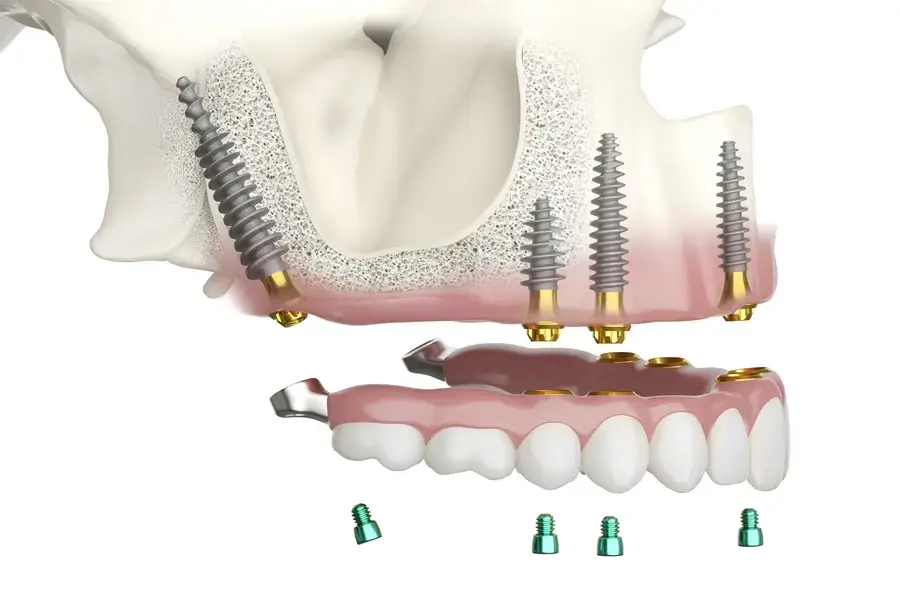
Provides posterior support that eliminates the distal cantilever need, resulting in 64% lower cortical bone stress versus All-on-Four protocols and superior stability.
Prévisibilité clinique
Achieves a high survival rate of 97%, with minimal surgical complications (0.98%) and marginal bone loss comparable to conventional configuration.
Fonction restaurée
Replaces missing molars functionally, restoring the natural 60–70% posterior load distribution. This unloads the anterior teeth and preserves long-term anterior integrity.
Conception d'implant& Dimensions
ROOTT P implants are available in Ø3.5 mm and Ø4.5 mm diameters, with lengths from 16 mm to 26 mm. The Integrated Multi Unit Head Design has a 3 mm cuff.
Ancrage Anatomique
Leverages the pterygoid bone (tuberosity, palatine pyramidal process, and pterygoid plates), which is characterized by D1-D2 dense cortical bone quality and is unaffected by severe sinus pneumatization. This area offers 8–10 mm of bone height even in severe atrophy.
Angulation chirurgicale
Optimal placement parameters are defined: Anteroposterior convergence of 40−50° and Buccolingual medial inclination of 70−75°, confirmed via CBCT planning.
Protocole de chargement
Supports Immediate temporary prosthesis; final restoration timeline is 3–4 months.
Solution sans greffe
Eliminates 6–9 month surgical delays and the need for sinus augmentation, working optimally in <5 mm residual bone height.
Supériorité biomécanique
Achieves stress reduction versus All-on-Four, replacing cantilevers with functional posterior molar support.
Résultats prévisibles
Demonstrated 97% survival rate and a low surgical complication rate of 0.98%.
Fonction accélérée
Delivers final restorative results in 6–8 months, offering faster functional loading and optimal patient experience.